Dresses & Drama: How Undiagnosed ADHD Made Me Shop Until I Dropped
I used to think I was bad with money until I read the signs of attention-deficit hyperactivity disorder and realized I was set up for failure by my flawed brain chemistry.


When I was 15, I thought $100 was the most money in the world.
I'd earned it babysitting our across-the-street neighbors' kids after school and working in the Junior Achievement program for most of high school. I was proud—so proud to have that $100. Upon announcing to anyone in my family who would listen that I was now a "hundredaire," my money-minded father pulled me aside and took me to what was then called Boatman's Bank to open my first savings account.
I still have this account to this day, now with Bank of America, which gobbled up the former Nation's Bank, which had gobbled up Boatman's, and I still share it with my dad, although I only keep a small amount of money in it. It's now primarily a way for my dad to send me cash on my birthday without too much drama.
My parents were intentional when it came to teaching their kids about money. I remember my mom showing me how to balance a checkbook and my dad having me file their bills and other accounting paperwork in the file cabinets at home. Both my parents were very careful with their money. My dad focused on savings and investments, paying off all bills in full every month and paying more than the principal, plus interest, on their home loan, while my mom refused to spend more than $10 on almost anything. For this reason alone, I should have been good with money, as both my sisters are, and yet, when I graduated from college and lost my mind after a short-lived, stressful marriage marked by poverty and going $10,000 in debt on an annual salary of $18,000, I adopted a fatalistic point of view —
It didn't matter.
I didn't make enough money to buy anything I actually wanted. I could barely cover my cheap $250 a month in rent while living and working in Midland, TX. I went from paying off my credit card bill in full at the end of every month to carrying a large debt. And my marriage wrecked me emotionally and financially; for the first time in my life, I had suicidal ideation and severe depression that would last long after the divorce papers were signed. A few years after that, I was diagnosed with bipolar disorder. I just wanted to feel better, as my sadness was so vast and deep. So I spent every dollar I got my hands on for years, even though I hardly had any money at all.
'You need to make more money'
My father repeated the same mantra as I struggled financially while pursuing my dreams as a writer: "You need to make more money." He was convinced that being broke was making my depression worse (it was), and that I would never get my bipolar disorder under control if I didn't make enough money to sustain myself.
Then, after about a decade of being lucky if I made $65k a year as a journalist, I caught a break and was promoted to editor-in-chief of The Root. I was compensated with a low six-figure salary, the most money I'd ever made. The salary changed my life overnight, as I went from barely being able to pay my rent in Washington, D.C., to living nicely in Midtown East in Manhattan, less than half a mile from work.
But a funny thing happened after I finally got my bipolar completely under control through therapy and medication, and finally made enough money to take care of myself — I couldn't stop spending. I still had the same fatalistic attitude towards money. "It didn't matter," I would think, as I drove myself back into debt in a few short years.
But because I finally made good money, getting regular raises and promotions, it wasn't obvious that I was still struggling. I could afford to take out loans to consolidate my debt and pay it off over time whenever I got enough sense to realize I was in trouble. Each time I got a loan and restructured my debt, I told myself this would be "the last time." But it wasn't. It just kept happening over and over for a decade.
I would talk to my therapist about my shopping habit quite a bit. How illogical it was and how I didn't understand it. How it felt like a compulsion. We looked for "origin stories" for my spending. At one point, I thought the culprit was the time my father told me I was "bad with money" as a child because I often spent my extra cash on clothes or my music collection. Never mind that by then, I had almost $1,000 in the bank, and I would go on to work the whole time I was in college for the student newspaper, graduating with more than enough money to buy some items for my first apartment. The narrative didn't affect me until after my divorce, when everything became unmanageable. Could that really be it?
Then we thought it was about how frugal my parents were and some issue I had with delayed gratification. My family rarely went on vacations, ate at restaurants, or spent money lavishly. Even though we were technically "upper middle class," all my no-name clothes and shoes came from Payless, Marshalls, and Target. The one name-brand sweatshirt I owned, a Tommy Hilfiger I had begged for, I had to share with my younger sister. But how could I have a delayed gratification issue when my entire career was an act of delayed gratification? I languished in the mushy middle for a decade, barely eking out a living.
Something else was wrong.
Suspicious Minds
For years, I'd suspected that along with being a depressive with bipolar disorder, anxiety, a few phobias, and PTSD from my marriage, I had attention-deficit hyperactivity disorder, but I never pursued the thought because I'd heard that the medication for ADHD could trigger mania. My experience with out-of-control bipolar disorder and its related hypomania throughout my 20s had been so traumatizing that I never wanted to experience it again. For me, the risk wasn't worth it. So I assumed my overspending and issues with money were rooted in the impulsivity that comes with having a mood disorder—long after the mood disorder was treated, stable, and no longer an issue.
I should have known, though, that the ADHD was the problem now. I was "good" with money if it was anyone's money but my own. I balanced budgets at work with ease, rarely overspending. But my personal accounts were almost always in shambles.


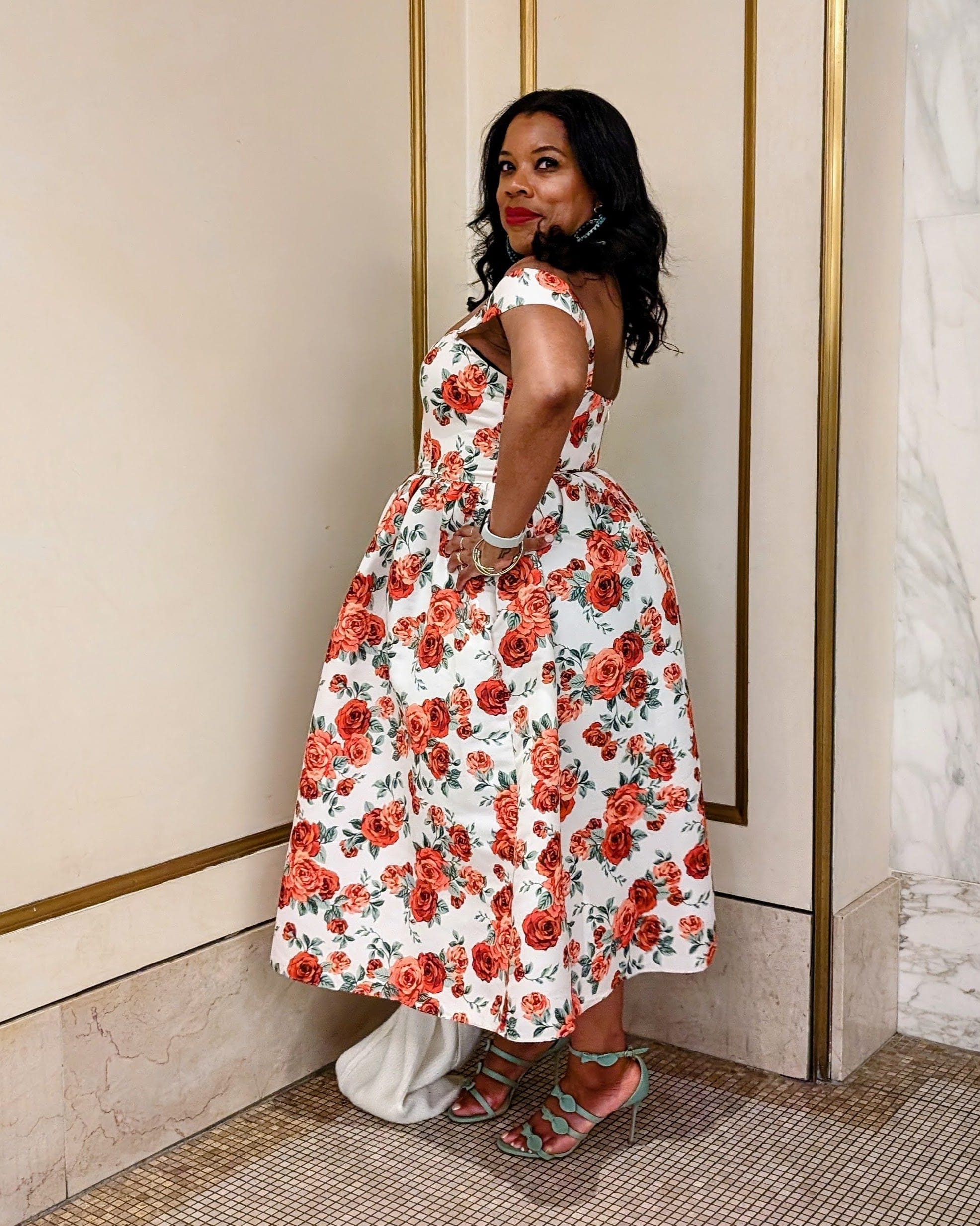



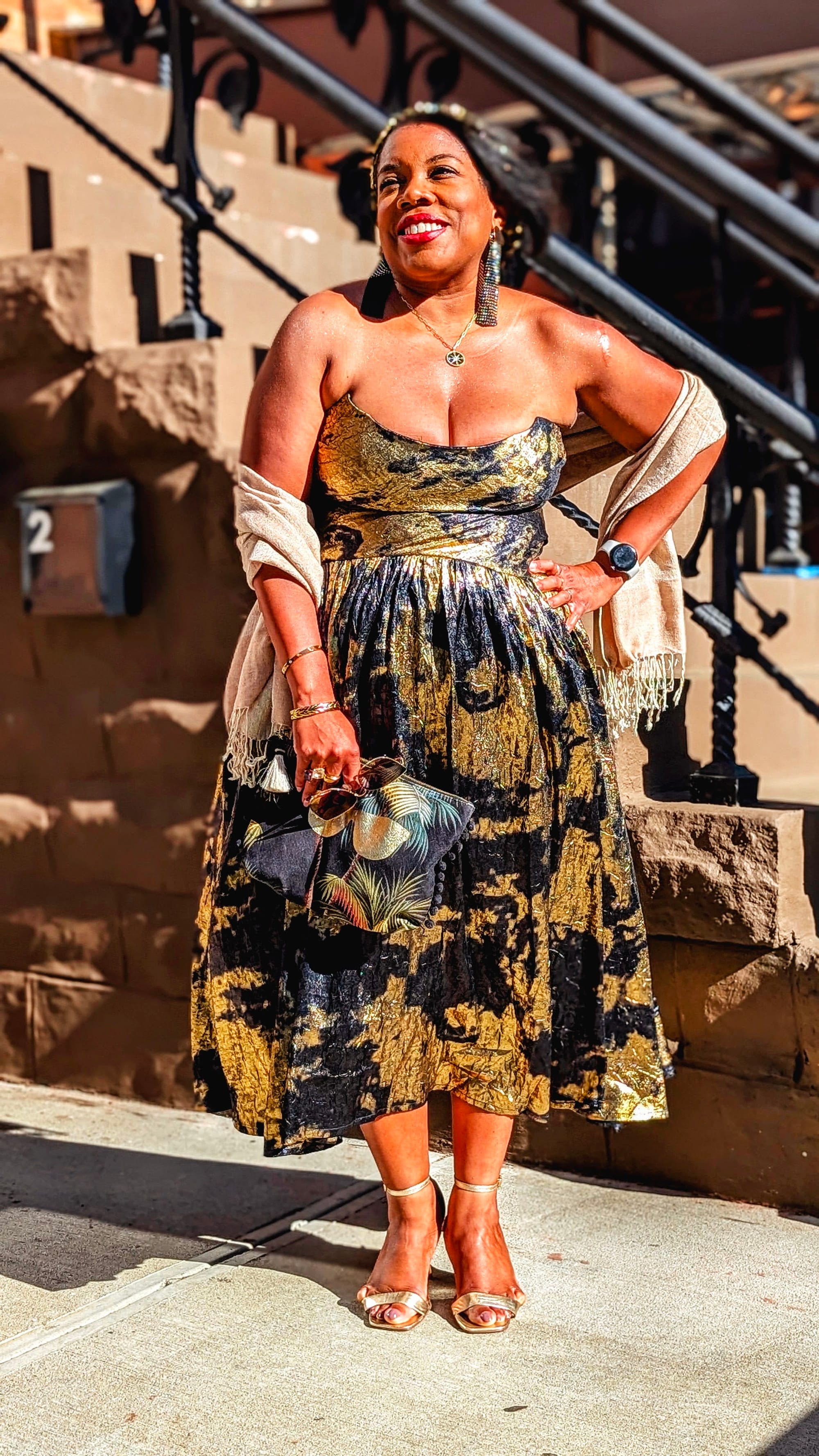


The many dresses of The Snob. (BELTON ARCHIVES)
My wardrobe, on the other hand, was outstanding. As someone who'd always loved fashion, even drawing clothing designs as a child, I had always dreamed of finally making enough money to build the closet I wanted — and now I had it. The only problem was, it was never enough. I couldn't have two pairs of jeans; I needed a dozen in different colors and styles. I couldn't have a few ball gowns for the galas I often attended as an editor-in-chief; I needed fifteen or more options, buying a new set of gowns every fall. And often I shopped online when I was lonely or bored, mindlessly clicking "add to cart" whether I needed it or not. I used to tell my therapist it was like I went into a trance, or a fugue state, and just spent.
It was illogical. And I spent a lot of hours venting to my therapist about it.
Then I left my job at HuffPost in January 2024 and had to go on a budget that I just barely had control over. I had plenty of savings and investments at this point, so I wasn't worried. But not working revealed something I had been fighting my entire adult life.
Even though my bipolar was under control. Even though my moods were regulated. I still couldn't stop spending.
Confessions of a Shopaholic
Intellectually, I knew my money was finite. But my impulsive brain did not care. Every two to three months, I would go on a spending bender that would last for weeks, sometimes months. And the main things I bought were clothes, bags, and shoes. Eventually, I opened a shop on Poshmark to unload some of my shopping "mistakes," where I purchased items that didn't fit but forgot to return them. While I was initially good about updating the site, I lost interest once I left my job. In fact, I became uninterested in everything. It was harder to work on my book. It was harder to concentrate. It was harder to read or focus.
After I realized I hadn't finished a book since the pandemic, when for most of my life I had loved to read, I became concerned. Was I losing my mind?
My mother, who also had loved books, stopped reading in her 60s after the first signs of dementia started popping up. I began to worry I had early-onset Alzheimer's. Something was terribly wrong. But neither my therapist nor I could figure it out. Then I remembered that old idea—I might have ADHD.
I didn't know much about ADHD beyond it was over-diagnosed in young, rambunctious boys, and I had always been a "mature for her age," well-behaved, gifted and talented kid. What I didn't know was that these things were signs of ADHD in girls. That it presented differently. From the outside, I always looked put together and polished. I was intelligent and spoke well. Even as I was telling my therapist that my life was a complete mess, I didn't look like one, so she didn't quite grasp how debilitating my spending was for me. She was suggesting budgeting classes and Shopaholics Anonymous, but it all sounded wrong.
Hilariously, I realized I probably had ADHD from ending up on the perimenopausal side of the social network Threads, where 40+ year old Gen X and elder Millennial women lamented all the things our mothers never told us about menopause. Soon, I started seeing a lot of the same messages: "gifted and talented," "well-behaved," "burn-out," "brain fog," having internally messy lives while looking like we have it "all together" on the outside ... and late-diagnosed ADHD.
I ended up making an appointment with my psychiatrist more than two months ago, and after some descriptions of my symptoms and a brief questionnaire, he prescribed me a low dose of Ritalin.
The results were almost instantaneous.
For the first time in my life, I felt ... normal. My head was peaceful and quiet. I didn't feel like I couldn't relax or enjoy a moment. It didn't feel like I had 32 open tabs in my head. And I could focus—on writing, on conversations, on tasks without abandoning them. I no longer felt like I was losing my mind. In fact, I felt good enough to do things I'd been avoiding for years—like relaunching this blog. What I thought had been laziness was executive dysfunction. What I thought was me being undisciplined with no impulse control was my brain craving constant stimulation from dysregulation. What I thought was a love of shopping was just noise. Noise that was now silent. Much like how mood stabilizers had calmed my mood swings, and GLP-1s had silenced my constant cravings for food, Ritalin had brought a new peace to my brain.
Now, did it solve every problem? No. But I actually had a lot of good ADHD coping skills before I was formally diagnosed. I'd developed them in college when I was struggling to remember things. I used to carry around a giant notebook with my schedule in it so I could stay on task. Today, it's my Google Calendar, where I plot everything from when to get up and go to bed to when I need to shower and get ready for the day to my usual meetings and appointments. I even put fun things like dinners and parties in my calendar, because I can't remember those either. If it's not written down, it's not real, and I've been that way my entire life.
Another sign I clearly had ADHD.
Today, my spending is completely under control, but I'm stuck with the debt I accumulated when it wasn't. It's like my life was a long spending party and now someone finally turned on the lights. The reality has been sobering. But at least now I know why it happened and how much of it was beyond my control due to my brain chemistry. I don't beat myself up anymore or feel guilty about it. I no longer see myself as a broken person who can't control myself, as if this were a moral failing and not a mental illness. And I don't even miss shopping, much like how I'm no longer obsessed with food. No longer being controlled by my impulses has been a game-changer.
I still sometimes think of all the time and money lost due to this illness. Of the relationships that didn't make it, and the situations that didn't work out as I wanted, all because my ADHD was out of control. But all I can do is move forward in life, now on a mission to stay healthy and stable no matter what. Because while looking good is nice, feeling good is paramount.
Finally having my outside match my inside is a form of peace. It's a form of acceptance.
And, finally, a form of love.