The Plot Against Black Wealth
If you're broke and Black, it's probably by design.


If it feels like nobody has any money these days, you aren't imagining it.
They don't.
In fact, if you're Black, you've watched your median net worth decline by 25 percent since 2022. That's from a paltry $49,100 median net worth in 2022 to an even more depressing number, $36,800 in 2025. And with more than 600,000 Black women and half a million Black men who have lost their jobs since 2025, that number is likely worse.
For comparison, in 2026, the federal poverty line in the United States for a family of four is $33,000 a year. And the median net worth for a lower-middle-class family is $43,760.
So Black households are broke-broke.
This is unsurprising, given our history of being paid less for our labor. (Or not paid at all.) Black Americans have the least wealth out of all racial groups in the United States. And we're the only racial group that has lost money per household, according to newly released Federal Reserve data.
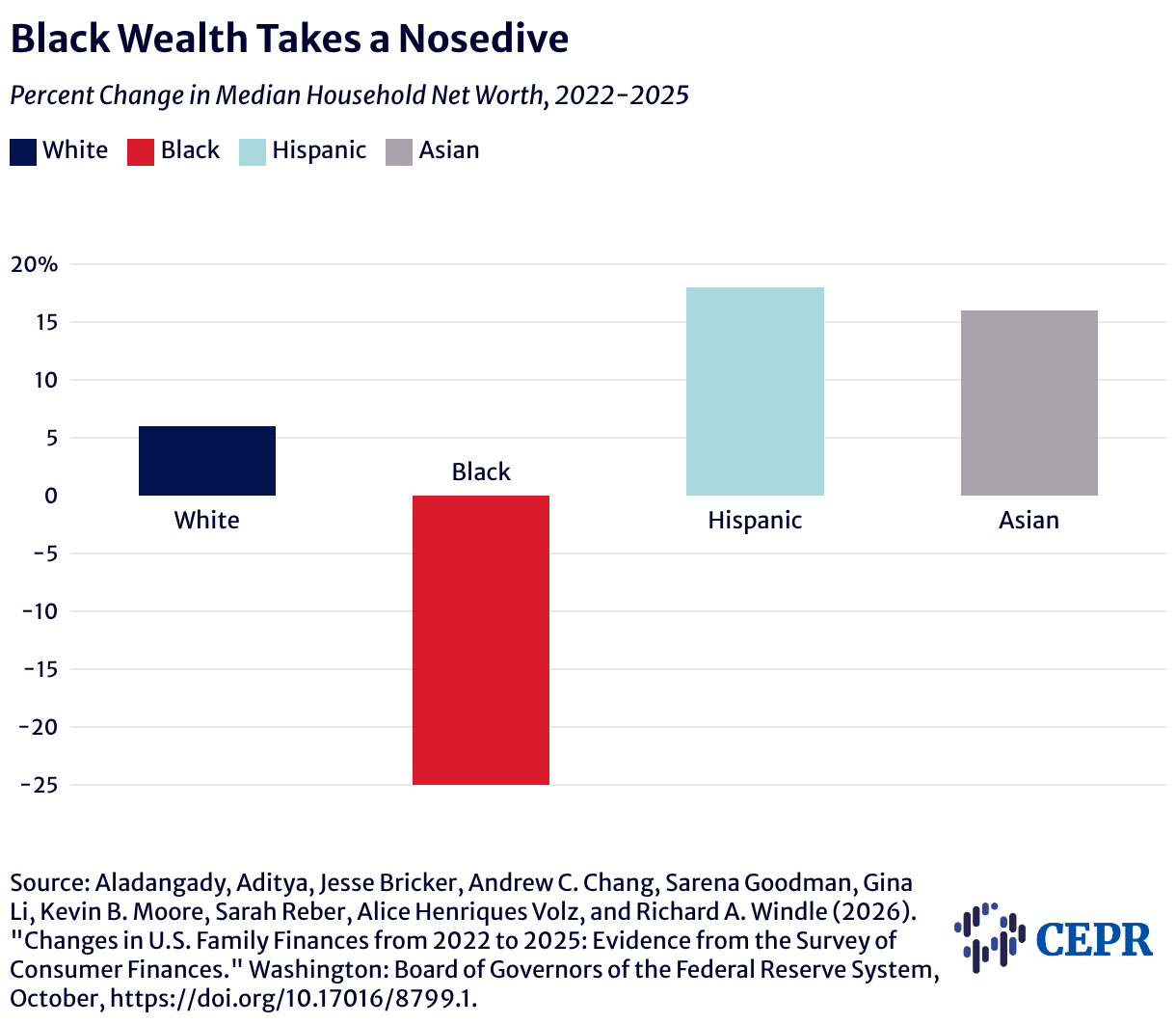
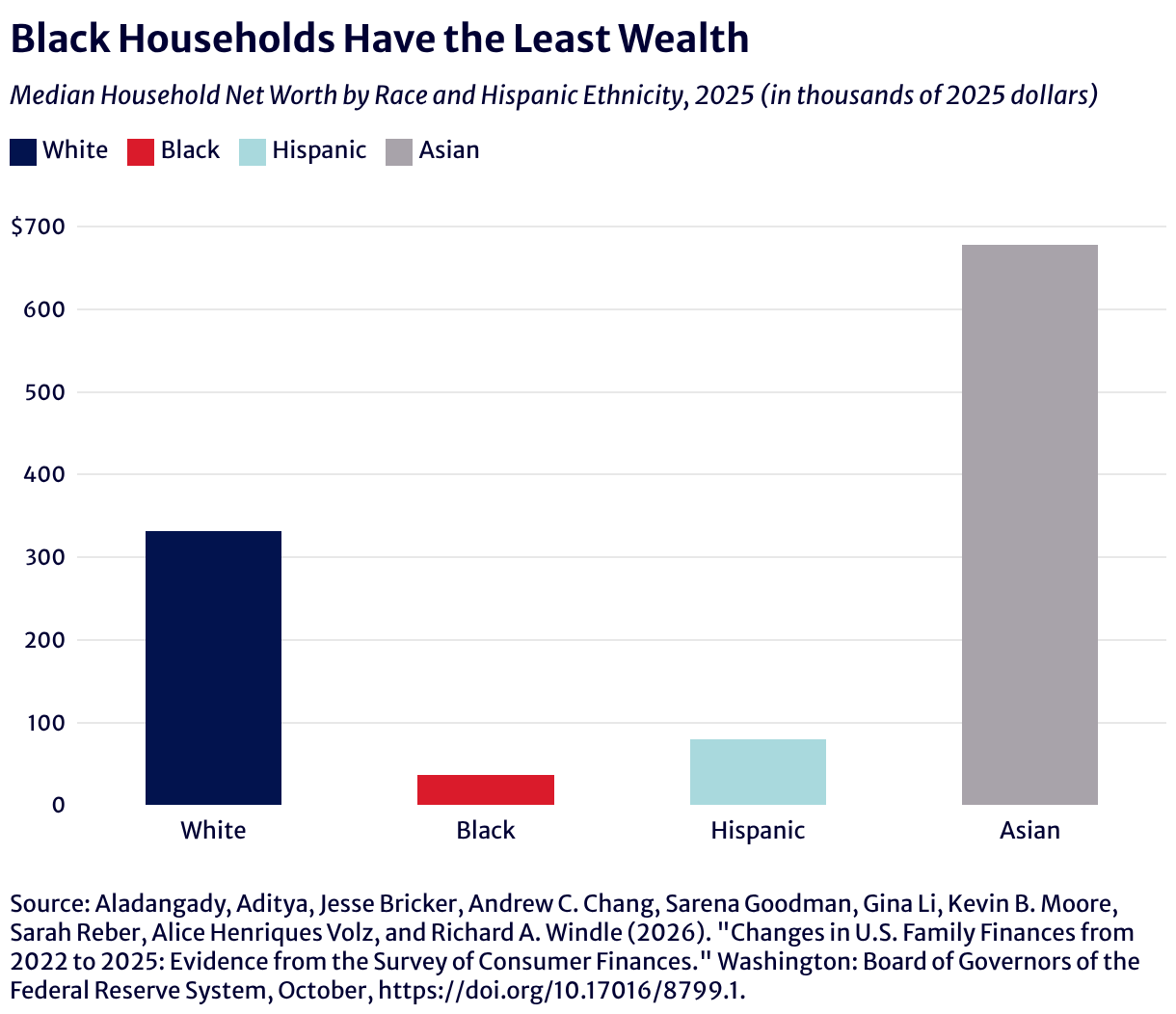
None of this should be surprising, even if it's rage-inducing. Many of the hard-won financial gains our parents and grandparents made since the 1960s are slipping away, just like our civil liberties and voting rights.
And it's happening not because we failed, but because many of us succeeded despite a system meant to break us.
White supremacy abhors any challenge to its dominance, or any evidence that its greatness is pure mythology.
We had to be stopped.
Haters Forever, Motivators Never
When I was a child, my grandmother came home one day agitated from church. I was about 12 or 13, and my siblings and I were spending part of our summer in Arkansas with her, as we often did.
In a huff, and at no one in particular, she entered the house and said 18 words that burned into my brain and have stuck with me my entire life:
"(People) don't want you to have shit. They want you to be broke and miserable just like them!"
My grandmother was a woman who spoke plainly and to the point. She was also charming, whip-smart, and cruelly funny. She'd run into someone she didn't like at church, someone she accused of being jealous of her. And before you wonder if my tall, striking grandmother had "haters," she most assuredly did. And for good reason.
She hadn't been broken by the hand life had dealt her.
With my grandfather by her side and her 9 children supporting her, she worked her way out of the poverty that had plagued our family for generations. Poverty that was created when her father's land was stolen from him, forcing him to work as a sharecropper. She managed to beat the system, so she walked tall and proud. This irritated quite a few.
At the time of her rant, she was talking about Black people, but I am not, because I know the crabs-in-the-bucket mentality goes beyond race.
I am talking about America.
And America doesn't want Black people "to have shit."
The Big Lie
One of the greatest myths this country promotes is that if you work hard, keep your nose clean, and achieve success, all will be well. You'll assimilate. You'll be accepted, even celebrated!
And that happens sometimes, but not when you're Black.
When you're Black, you quickly realize that achievement doesn't come with respect or adulation, but jealousy and scrutiny. Even from other Black people. It couldn't be that you earned it. It couldn't be that you, a Black person, would be that smart, talented, or good. Surely you cheated in some fashion!
Things like having a supportive family, making money, having "nice things," making friends, and generally "living your best life" are upsetting. Black joy is maddening. And Black wealth is an affront to the very "nature" of things.
Black people are supposed to be poor. How dare you make money!
Hence why wealth often doesn't protect Black people from anything. If anything, the amount of scrutiny only increases, as the system seeks to humble and destroy the aberration, this glitch in the matrix. So Black people with money spend a lot of money trying to protect themselves from those seeking to separate them from their wealth.
On lawyers. On accountants. On money managers and wealth advisors.
Because we know what happens to Black people when we own something, build something, or grow something independent of the system never meant to support us.
From my great-grandparents' stolen farm to the burning down of Black Wall Street in Tulsa, Okla., one thing remains true.
Someone will try to take it.
Money Doesn't Matter, but Racism Does
If Black people are broke, it's because our wealth is constantly being undermined and stolen, not because of the nature of Blackness.
When slavery ended, Black people wasted no time educating themselves, organizing, finding their relatives, building businesses, acquiring land, voting, and running for public office. That was Reconstruction, and without slavery holding us back, we scrambled to make gains, and gain we did. Post-slavery, we had Black business-owners, senators, and representatives, as chronicled in Ta-Nehisi Coates' book of essays, "We Were Eight Years in Power," and all that progress washed away—the wealth, the gains, the political power—in a wave of violence that plagued the South for generations.
After the Civil Rights movement, our parents and grandparents got a second bite at the apple. It was a second chance to educate themselves and build wealth, and they did, growing a formidable Black middle class and launching the political careers of so many Black leaders. The Congressional Black Caucus was established in 1971 with 13 members. Today, it has a record 62 members, and the CBC remains one of Congress's largest and most powerful voting blocs.
With less than 15 percent of the population, we produced multimillionaires and billionaires, the first Black president, Barack Obama, in 2008, and the first Black vice president, Kamala Harris, in 2020.
We don't waste time or opportunities, but it's hard to build a house on American shores when the waves of racism keep crashing down, eroding all that was once there.
But that's life in America. That's life in the Great Regression. The great clawback of everything we fought for.
Two steps forward. A dozen steps back.
I'm grateful that we aren't where we once were, but as this Black wealth report revealed, we still have a long way to go.