Who's Afraid of the Black Elite? What the Discourse Around Martha's Vineyard Gets Wrong
It's August, which means a bunch of people are "discovering" that Black people "summer" in Martha's Vineyard again!

Editor's Note: If you're seeing this newsletter for the first time since never and wondering why you received it, The Black Snob is back, and you were an original subscriber on one of my other platforms! Learn more about my return to blogging here.
Right now, many of my friends and colleagues are on Martha's Vineyard, living their best lives, partying with Michelle Obama. And as someone who only goes to the Vineyard every other year, I'm not jealous at all!
But the online discourse is still discoursing.
Every August, people online "discover" that Black folks vacation on the Vineyard. And if you believe social media is real life (I don't...), you might think more and more Black Americans despise other Black Americans who go there, particularly those who are a part of the so-called "Black elite."
(For the purposes of this story, the Black elite is comprised of people who participate in Jack & Jill; summer on Martha's Vineyard and Sag Harbor; belong to the Divine Nine, The Links, Boule, or some other prestigious organization; are Ivy Leaguers or went to other "elite" schools or "the best" HBCUs; and have some form of generational wealth. I only check one-and-a-half of those boxes.)
But I'll have you know, my mother has the Internet beat, as she was hating on the Black bourgeoisie in the 1960s. And widespread disdain for the so-called "Talented Tenth" goes as far back as the man who popularized the term, if not further.
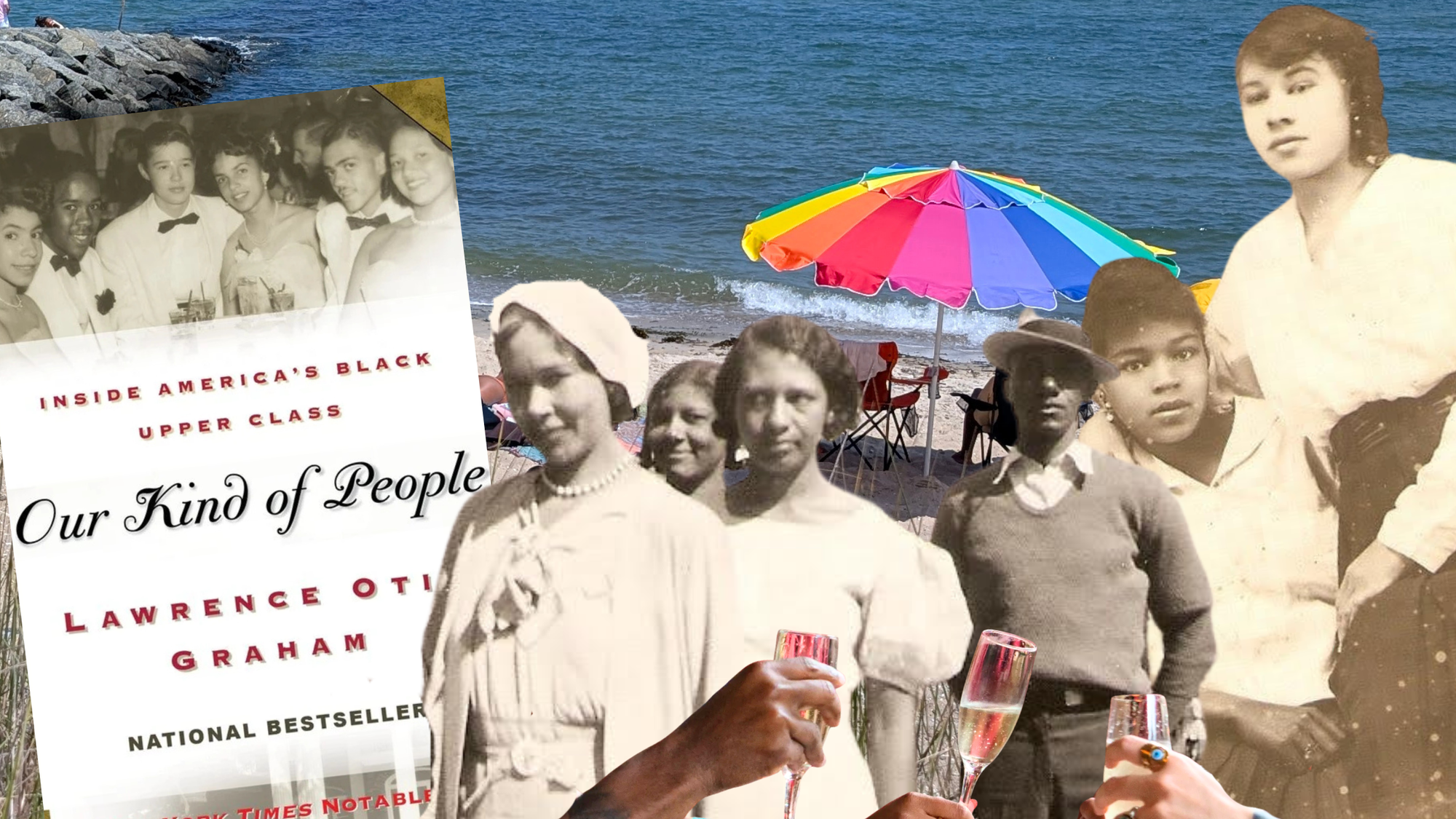
But this particular form of umbrage over the Martha's Vineyard set actually started not online, but in 1999, when my mother and millions of others were devouring copies of Lawrence Otis Graham's book, Our Kind of People.
The first chapter opened with what was the 1999 equivalent of "shots fired," as it rattled off a who's who of who was in the club ... or not.
Bryant Gumbel is, but Bill Cosby isn’t. Lena Horne is, but Whitney Houston isn’t. Andrew Young is, but Jesse Jackson isn’t. And neither is Maya Angelou, Alice Walker, Clarence Thomas, or Quincy Jones. And even though both of them try extremely hard, neither Diana Ross nor Robin Givens will ever be.
Money can't buy you into this class. Literally.
The book was a national best-seller and gave insight into the histories and habits of some of America's oldest and most well-established Black families and organizations. Some saw it as a public airing of expensive, dirty laundry. I was a broke college student at the time and had no interest, but my mother, a hater of all things bougie, relished in what she saw as the comeuppance of the Black upper crust. The book was a sumptuous hate-read for her, as it confirmed her suspicions about the colorism, elitism, and gatekeeping that often took place in Black high society.
I distinctly remember her snickers when Graham revealed he had a nose job to better fit into something he was born into due to the colorism and obsession with "fine" (aka, Caucasian) features endemic of his background.
It was a color thing and a class thing. And for generations of black people, color and class have been inexorably tied together. Since I was born and raised around people with a focus on many of these characteristics, it should be no surprise that I was later to decide—at age twenty-six—to have my nose surgically altered just so that I could further buy into the aesthetic biases that many among the black elite hold so dear.
For my mother, this confirmed what she had always suspected — that some Black elites wanted to be as close to white as possible. But I would learn, years later during my own trips to the Vineyard, that the reality was more complex.
Perception Versus Reality
You don't have to be "elite" to go to Martha's Vineyard. No one is checking credentials. And it isn't a pretentious place — it's a sleepy beach town struggling to accommodate all the people drawn to the "party with a purpose" vibe in August when the art shows, luxury brand activations, and film festival are in full swing. But for most, it's more flip-flops and cover-ups than Louies and Louboutins.



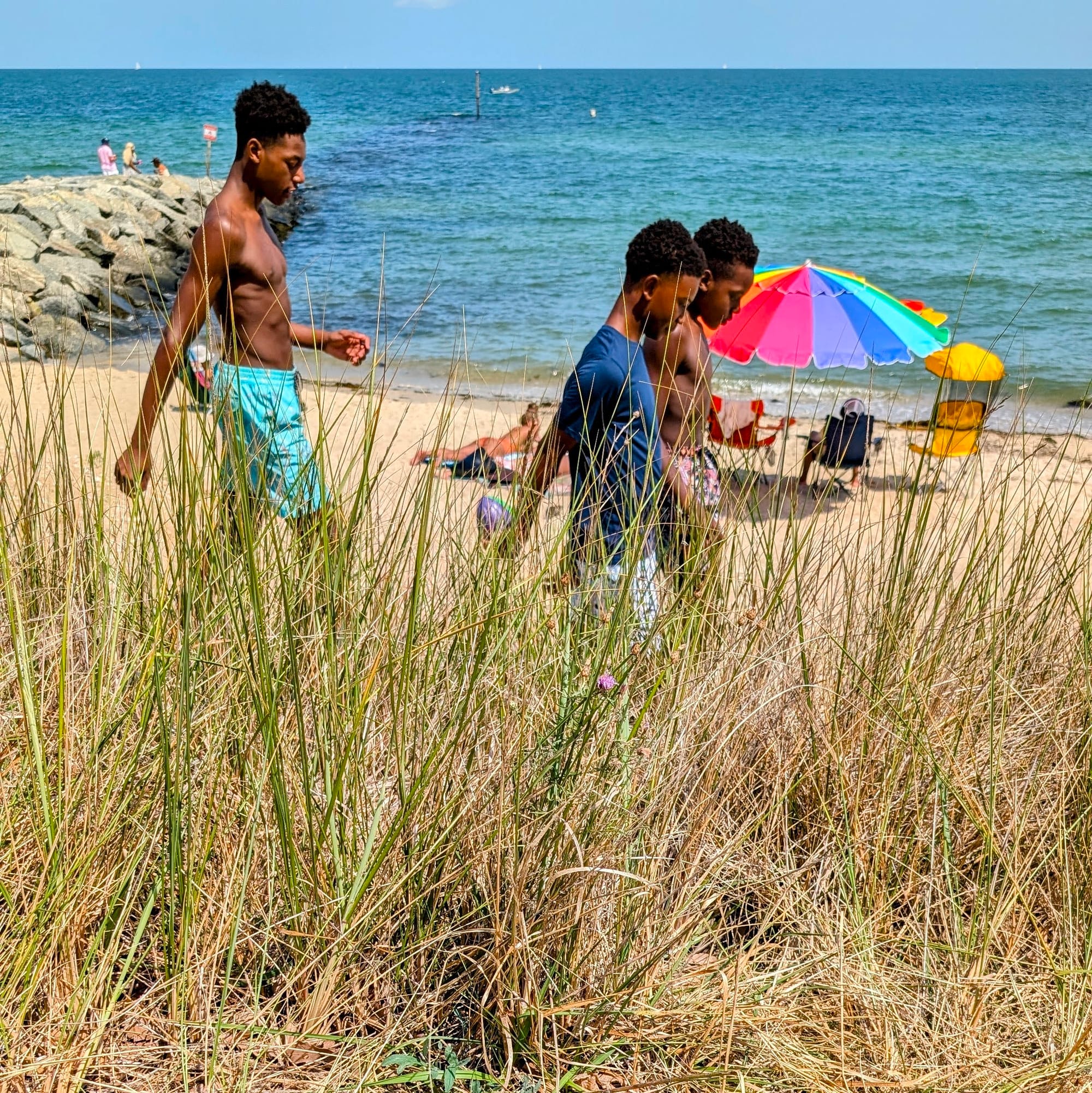


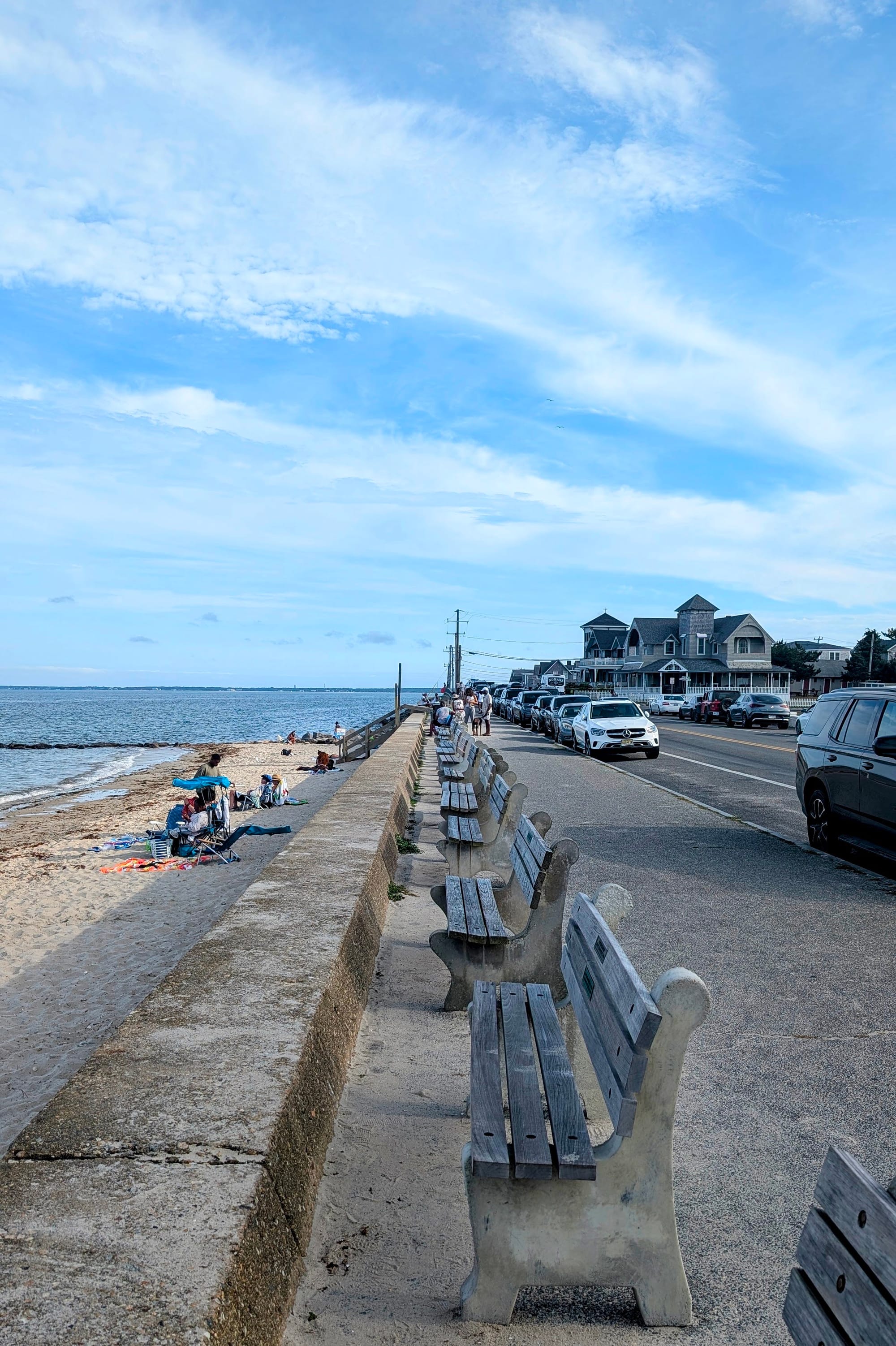

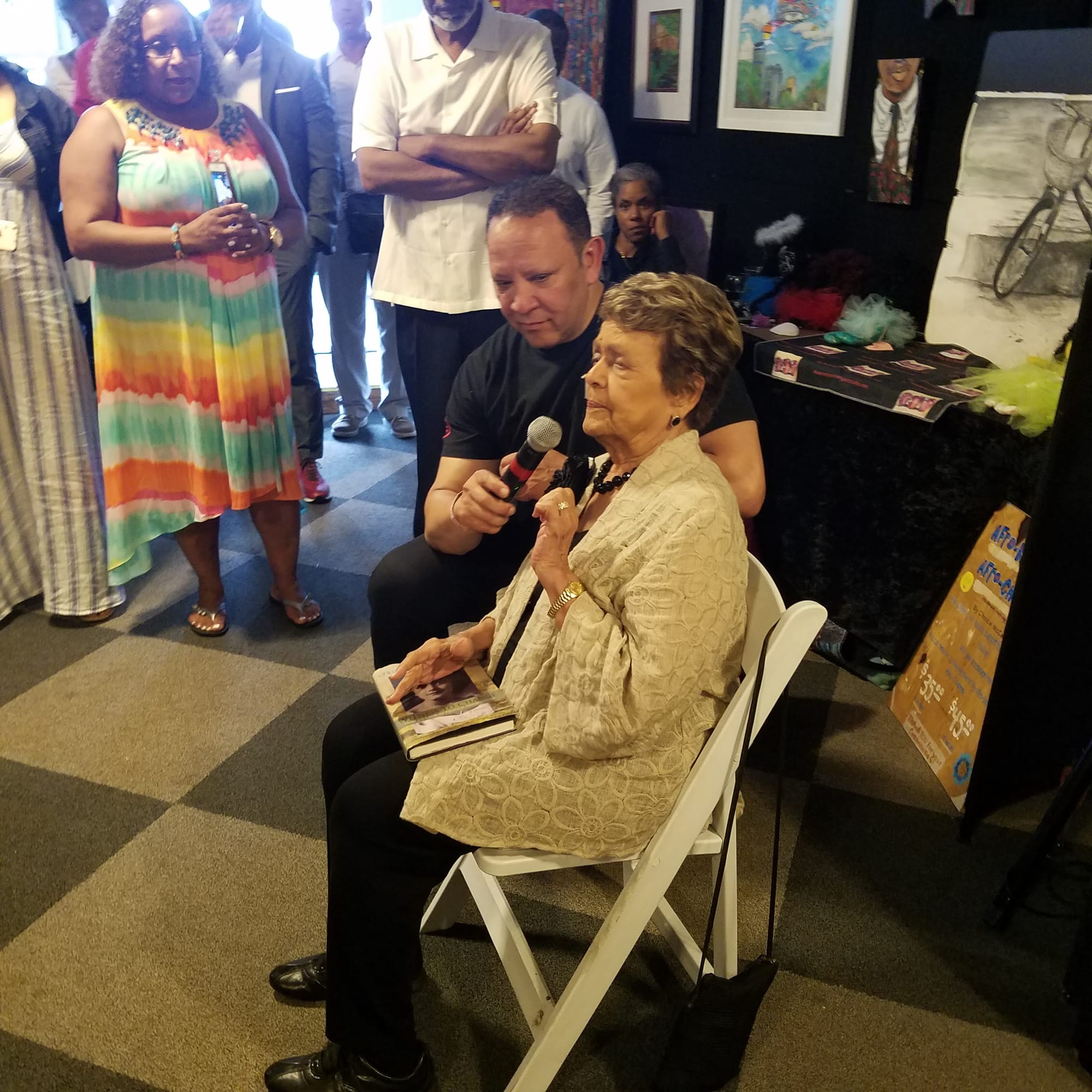
Martha's Vineyard from Vineyard Haven to Oak Bluffs and more over my many trips since 2016. (BELTON)
The first time I went was around 2016. I was there for a work event, stayed in a tiny, rundown bungalow in Oak Bluffs with three other people, and had the time of my life. The main thing I couldn't get over was how completely safe and free I felt there – something I've never felt in any other place in the U.S. I marveled at seeing Black youth run around, having adventures, completely unencumbered and unbothered by anyone. It was refreshing as the community vibes were immaculate — so friendly and welcoming. If you managed to survive the series of planes, trains, and automobiles to get to the island, you were welcome there.
The only downside to Martha's Vineyard is that this freedom isn't free. In this warm, inviting community, peace comes with a hefty price tag, especially if you want to go in August and don't plan things out six months to a year in advance. If you're going for family time, art, the beach, fishing, seafood, or napping with a book on a screened porch ... go in July.
Black (Elite) Is, Black (Elite) Ain't
A lot of people don't like the Black elite — particularly the ones who actually see themselves as "elite." Those are the literal snobs who gatekeep out of self-preservation and even irk their own kind. But they're hardly anything to fear or hate. Those who actually seek to separate from other Black people over class are often doing so out of a deep insecurity from being treated as less than by white people. They think that if you create a bunch of superficial rules (cough, respectability politics, cough), you can protect yourself from racism. It's honestly kind of sad.
The best people, no matter where they fall in the class divide, are people who feel good about themselves and are comfortable with who they are no matter where they go. Confidence is the currency that ultimately wins the day, and my personal story is a testament to that.
Even though some assumed I came from old money based on my blog name, I never had the desire to pull a Talented Mr. Ripley and fake my way to the top. I'm content being an outsider as I'm not ashamed of who I am or where I came from. In fact, I'm proud. It feels good to know I found success through my talents and personality, which, to me, is elite; I'm just not part of the Black elite, as Graham was, who died in 2021.
But considering how insidious racism is regardless of status, maybe we should ditch the intraracial class wars, stop trying to be better than each other, and start being better people.