Jason Arday, the Myth of Meritocracy and the Perils of Being 'Twice As Good'
Your best is never good enough in a game that's rigged.

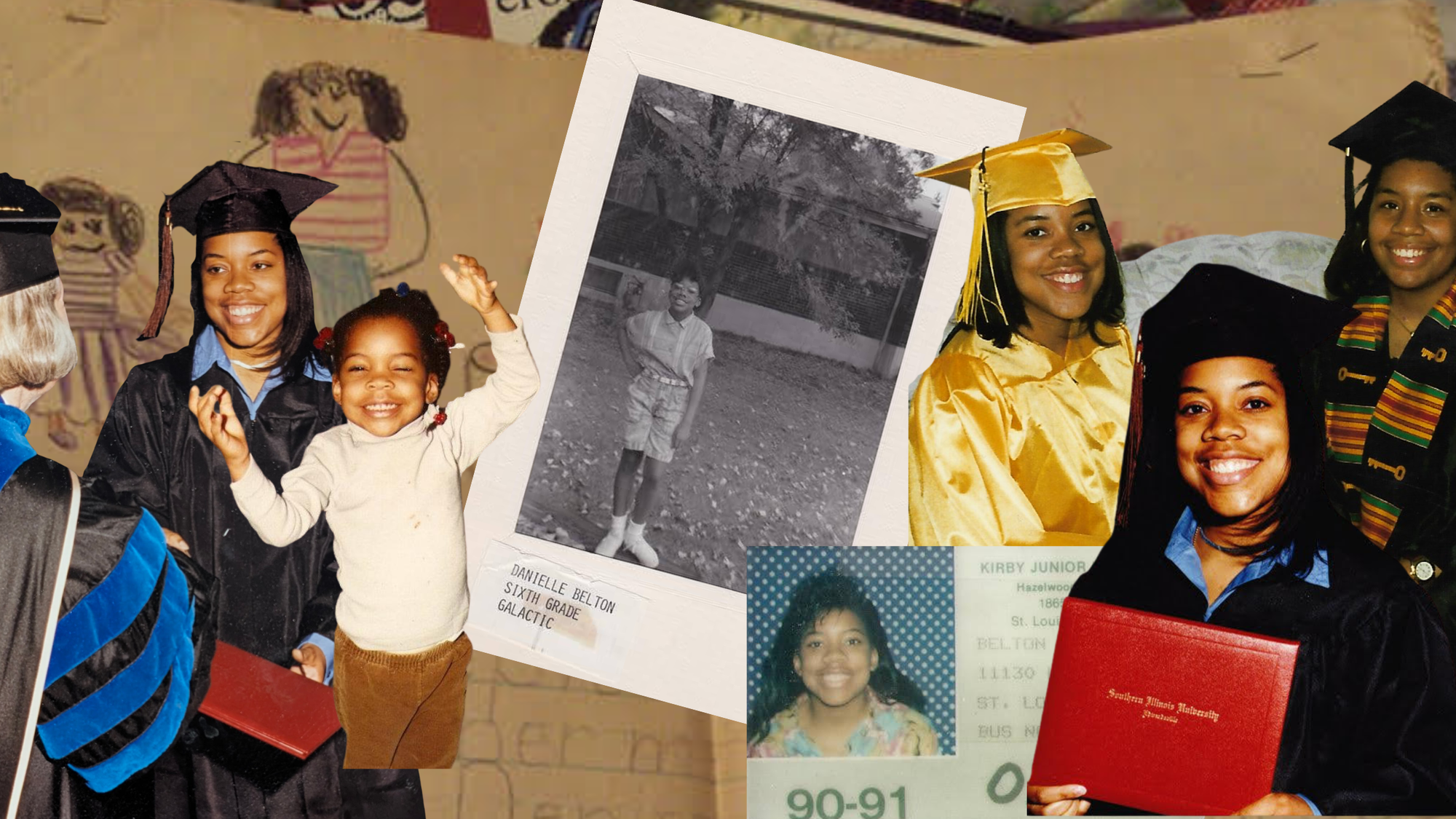
When I was in elementary school, I really wanted to be in our school district's gifted and talented program. I was already in the art program for gifted students, but the larger program was more rigorous and took place at a local high school. My mother, knowing that there were no Black children from my school in the program, tried to warn me off of it.
"Other children don't have to take as many tests," she said.
She made this remark around the time I was facing my second or third exam to get into the program. It was as if every time I passed, my guidance counselor thought it was a fluke, so she kept testing me and testing me. While my mother bristled, I was resilient.
"I don't care," I said. "I can pass the tests."
I was in the fourth grade and was a straight-A student. I read at a high school level and was regularly referred to as "mature for her age," when in reality, I was neurodivergent and endlessly fascinated by various subjects. The fact that I liked to read, and read so well, put me light-years ahead of most kids.
At the time, I wanted to be in gifted and talented more than anything because I believed it would be good for me to be around other "smart kids." I was bullied for most of the time I was in elementary school for being "a nerd," and I thought if I could just get into this program, I would finally fit in and be able to make friends. I was also very curious. The program was almost entirely white students, and I'd been told by my Black female principal that the white children were smarter, more talented, and better behaved than us — the Black kids at one of the few mostly Black elementary schools in our school district.
I wanted to see if it was true.
'Twice As Good,' With Thrice the Scrutiny
Last week, when the news broke that belagured Black and disabled professor Jason Arday had taken his life after being dogged by racists in the UK press over a plagiarism allegation, all I could think was how familiar this all sounded. How many times Black people were held to a much more rigorous standard of constantly moving goalposts compared to their white peers. How a plagiarism allegation is a career-ender for most Black people in any profession (despite Arday being cleared initially by Cambridge), but Mike Barnicle, a known fabulist, is a celebrated journalist, still making appearances on Morning Joe. And they made a movie about Stephen Glass for making up stories, but former New York Times journalist Jayson Blair languishes in obscurity. In fact, Blair was treated as so toxic that the Black editor who once championed him at the Times, Gerald Boyd, had his career destroyed over it, and he didn't even make anything up.
When I was working at the former Gizmodo Media Group as editor-in-chief of The Root, my new boss, a white man, gave a big speech about "meritocracy," and how people should be hired and rewarded based on their work. All the women and people of color bristled. Not because we thought we weren't good enough — most of us were gloriously overqualified to work for the former Gawker sites, and my team and I had grown The Root's traffic by 300 percent in less than nine months, overperforming on every metric. No, we just knew that meant he wasn't going to hire any Black, brown, or queer people in leadership because ... reasons. Meritocracy was just code for "we don't have to consider you unless you're 'excellent,' but this white man can be on this sixth job that he was fired from as he fails upwards." He could be a Mike Barnicle. There would be a place for him because his "mistakes" were always youthful indiscretions, even if he was 55 when it happened. Everyone else was constantly tested and asked to prove their worth.
Again, though, just as I was as a child, I didn't care.
"I can take it," I told myself because I believed in my team at The Root and our talents. We would go on to be the most profitable site in what became G/O Media's portfolio. It was the very last site they sold before it dissolved because it was the only one keeping the lights on.
Black people only make up about 1 percent of all professors in the UK, but are 3.7 percent of the general population. The numbers are just as bad in the States, where Black professors hover around 6 or 7 percent for a people who make up a little under 13 percent of the U.S. population. And the numbers for Black professors with tenure are just as abysmal. Yet, Black professors face more scrutiny, more criticism, and more attacks from within and without academia. The same goes in journalism in both the UK and the United States. In fact, in the U.S., the percentage of Black journalists in the mainstream has barely budged since newsrooms were first integrated during the Civil Rights Movement, hovering between 5 and 6 percent. Even fewer Black people are in leadership positions. Before I left HuffPost in 2024, I was among less than 6 percent of Black news leaders in the mainstream.
Black people are often told they have to be "twice as good" to make it in a profession dominated by white people. You can't be some anonymous benchwarmer. You have to start first team, and if you're on that first team, you better be exemplary. You have to be Tiger Woods or Serena Williams at their peak. You have to be a Super Bowl-winning Jaylen Hurts because there's no spot on the field for the Black equivalent of famous flame-out "Johnny Football."
You just don't get that luxury as a Black person or a woman. You can't mess up. Ever. The margin for error is zero. Twice as good, for thrice the scrutiny. Twice as good, for people to lie on you and destroy your career.
But I was always determined to not just survive in a racist system — but, somehow, thrive.
The Side Quest of Inequality
After passing my third exam in the fourth grade, I was accepted into my district's gifted and talented program. I still remember having the first of what would become a lifelong anxiety dream for me. I dreamt I missed the bus for the program and couldn't make it to class, no matter what I did. No matter how I tried, I kept getting lost down unfamiliar hallways and being sent on side quests.
This dream was not a metaphor.
It is precisely what happened when I entered the program. While I did not miss my bus that day, or any day, I quickly found that going to an all-white school full of teachers' kids, some of whom were only in the program by virtue of who their parent was alone, was not the paradise I hoped for — it was just a different kind of hell. Perhaps another lower rung than the playground taunts I'd already endured from my Black peers.
I wish those white kids had only called me a nerd or teacher's pet.
In fact, I wish those kids had said anything worth remembering to me, but they didn't. I was shunned for the entire time I was in the program. The one other Black kid and I sat alone at lunch. Teachers would "forget" my homework or mark me down as in class when I was out sick, then try to give me zeros and F's. And the kids all became a faceless white blob of hostility, as no one wanted me there.
At least at my elementary school, my classmates were actually proud of me. One of us was being represented in something we'd all been told was good, and I was one of only two Black girls in the whole school who were in the program. "She's so smart," they said. "She's gonna make our school look good." That's when I realized my classmates didn't actually hate me, but admired me. So I toughed it out.
My classmates and my pride were the only reasons I didn't quit after my first year.
As awful and isolating as it was, I stuck with it for the remainder of elementary school, hating every minute of it. But I didn't complain, because I knew the stories of my people and, despite my mother's warnings, I had inadvertently gotten the message that putting up with a bunch of nonsense was small potatoes compared to being spat on and ostracized by the white community for integrating a school. At the time, my heroes were Daisy Bates and the Little Rock Nine, Jackie Robinson, and Thurgood Marshall.
If they could make it, I could too.
After elementary school, I tried to test into the middle school gifted and talented program but, oddly enough, they said I "failed." I shrugged it off, somewhat relieved it was over, and went on to the seventh grade. My first quarter, I had perfect grades in three of my classes — a 100 percent average — and was named "Student of the Week," but I would never try again to join the gifted program. By that point, I didn't care. I knew it was all bullshit. I lost interest in trying to prove myself as my father lamented how I could have had a 4.0 if I "just studied," but by then I'd figured out that I could get a 3.6 or a 3.8 by doing nothing. What incentive was there to apply myself for a 4.0? None of it meant anything. Most kids who had a 4.0 or higher were taking Advanced Placement classes, and I was in those classes with them and was hardly impressed. Could they get a B+ on a test without even opening the book? Could they get an A- drawing doodles all day in notebooks?
Highly unlikely.
And I was still very good at taking standardized tests. I took the ACT without even opening a study book and got a 24. My father begged me to study and take it again because I could have gotten a 30 or better if I'd just applied myself, but all I cared about was that I'd tested higher than my also-smart big sister, Denise. If I was beating Denise, I was beating most other kids in my school. Why take that long, boring test again? For what? It was just a means to an end for me. I had to take these tests to get into college, just like I'd had to take tests to get into gifted and talented. And all tests do is prove you're good at taking tests, which I was. I tested out of some of my 101 classes in college and never looked back, getting the credit without ever taking the class.
I didn't want to do a bunch of "side quests" for inequality (and still don't). I didn't want to spend hours trying to beat a rigged system. I wanted to focus on my writing and art, which I did, at the expense of being a 4.0 student. I'd say the sacrifice was worth it, considering how my career turned out. There was more value in me writing novels and poems in my spiral notebooks during class than taking notes.
Today, I have a nephew who is very similar to me. He gets good grades, wins awards, has a lot of interests, is smart, and is very talented. He also has no interest in putting in the additional labor to be a 4.0 student, much to the chagrin of his mother and my baby sister, Deidre. He'd rather play music or draw. And I'm of the mind that as long as his grades never dip lower than a 3.3, to let him live his life. Because this mess is a scam. They want us to believe success can only be found in playing this strict game, when in actuality, there are no rules. White parents put their kids in classes to learn how to ace the ACT. My mom thought that was "cheating," to the shock of our father. But once you realize no one else is following these "rules" of meritocracy, it frees you. Don't play the losing game set up for you. Play your own game, and win.
I just wish Jason Arday was still here to see the love and support he's getting across the diaspora. I wish I had known sooner what he was going through, so I could have pushed back and written about it. I wish more Black people understood that in this rigged game, it's pointless to try to live up to the imaginary standards of the same people championing the mediocrity of white men and calling it meritocracy. Their standard is in the basement. Their "standard" is a convicted felon, diabolical sex pest, and racist who is barely literate, and they made him leader of the free world.
Don't play by these "rules." Blaze your own trail and never look back.