Schools Keep Banning Toni Morrison's 'The Bluest Eye,' and I Think I Know Why
They're not just banning a book. They're banning children from learning empathy.

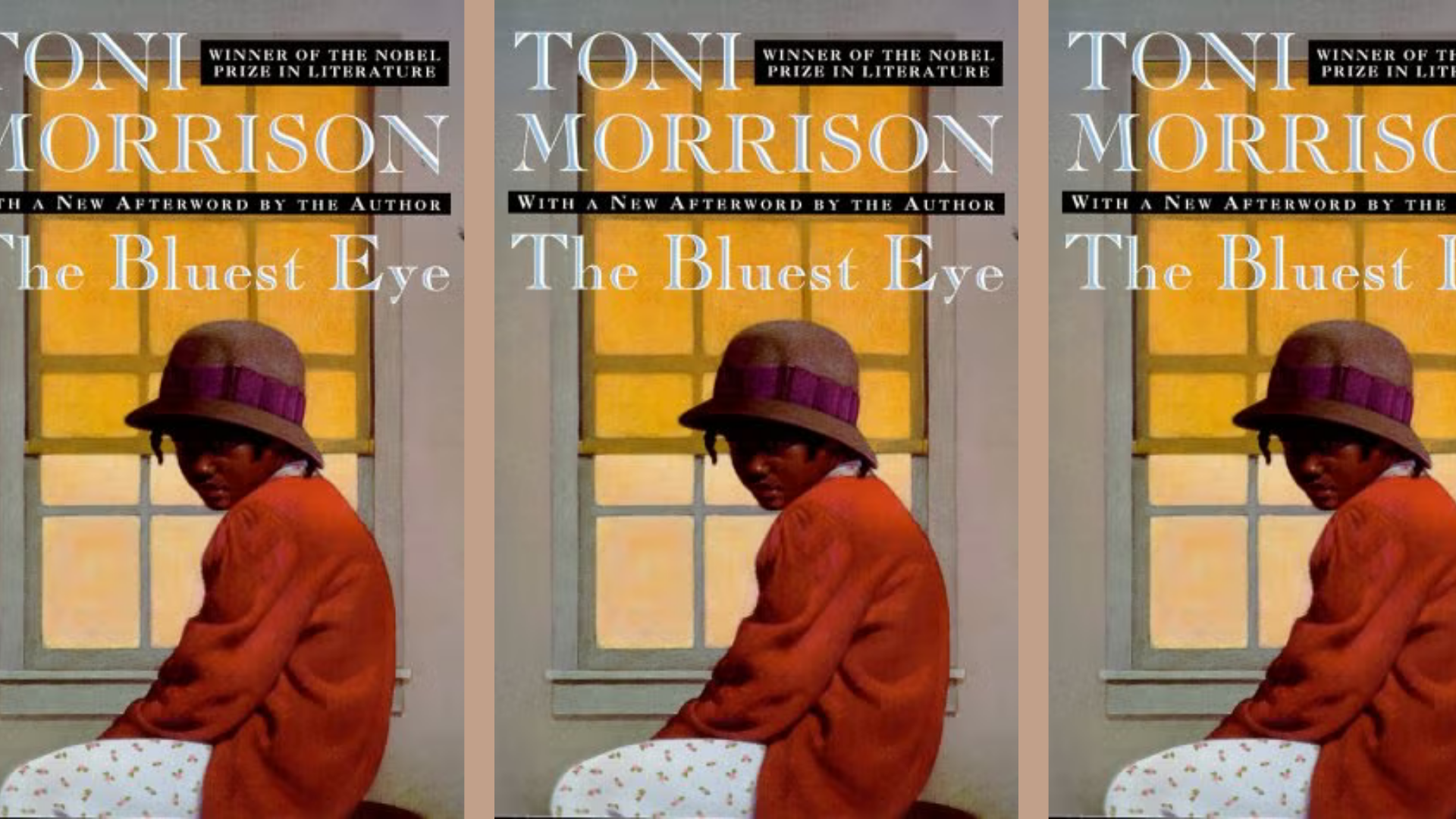
Since at least 2004, school districts have debated the merits of Toni Morrison's debut novel, The Bluest Eye, often trying to ban the complex book instead of teaching it.
Just last week, a school system in Georgia suddenly banned the book due to its difficult, heavy themes—which include racism, colorism, poverty, rape, and incest—with Cobb County Schools Superintendent Chris Ragsdale arguing it wasn't appropriate for children.
“The words speak for themselves,” Ragsdale said. “Both as a father and as a superintendent, I think about a parent having to explain to their sixth-grade daughter after she encounters explicit descriptions of child incest and rape in a book provided at school, without parents’ knowledge. As the superintendent responsible for the instruction of 100,000 students, I do not have the luxury of making that decision for other parents and their children.”
Literary advocates and anti-censorship proponents alike decried the ban of a book that gets banned or challenged by schools almost annually.
But The Bluest Eye isn't the problem.
The problem is that its themes are very real in our children's lives, and that a superintendent is more concerned with a child reading a fictional, brutal assault than the very real assaults that happen to children every day, usually at the hands of adults who are supposed to love and protect them.
Racism and poverty are problems that too many young people are already aware of due to the circumstances of their birth. But people often police what children read in school, thinking a book will somehow destroy their innocence. This usually ignores what these same children watch, listen to, or consume online.
I suppose a book is more dangerous than Facebook to these people.
(Note: Social media is explicitly more dangerous to children than books.)
The Bluest Eye Is Fiction, but 'Pecola' Is Real
The book, for which Morrison won a Pulitzer Prize, is not light reading by any definition, but it should be required reading because, while fiction, it holds multitudes about Black women and girls.
I was a college freshman when I was assigned it in my African American Literature class. Back then, I could read almost anything and remain largely unaffected, as it was simply information to me.
The Bluest Eye was the first book that wasn't.
The Bluest Eye was an eloquent but painful read as Morrison transports you to a loveless world of pain and rejection for an 11-year-old, dark-skinned girl named Pecola Breedlove. It was sad and uncomfortable, and it hit home because it made me think of a girl I went to elementary school with who was my first bully.
The girl, whom I'll call Nellie, was dark-skinned and very pretty, but she didn't know that because her parents, also dark-skinned, made her feel awful for looking like them. They mocked her ebony skin tone and derided her thick, dark, curly hair. They were also less well-off than my family and were religious conservatives who wouldn't let her participate in most holidays or school activities.
She was awkward, and because her parents were more punitive than nurturing, she didn't do well in school. She was also often neglected, as her parents expected her to do things—like get dressed or fix her hair—by herself from a very young age.
By contrast, my sisters and I were the protected and polished-looking girls because our perfectionist, stay-at-home mother demanded it. We were all freakishly well-behaved and got good grades. We were also very sheltered and couldn't walk down the street unattended or ride bikes all over the neighborhood like the other kids. In fact, we were relegated to our backyard where our mother could watch us from the kitchen window.
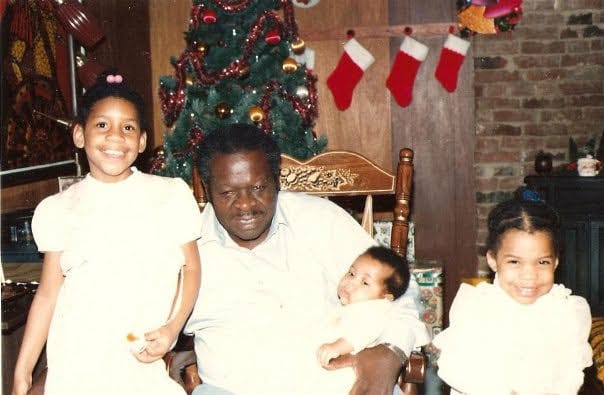
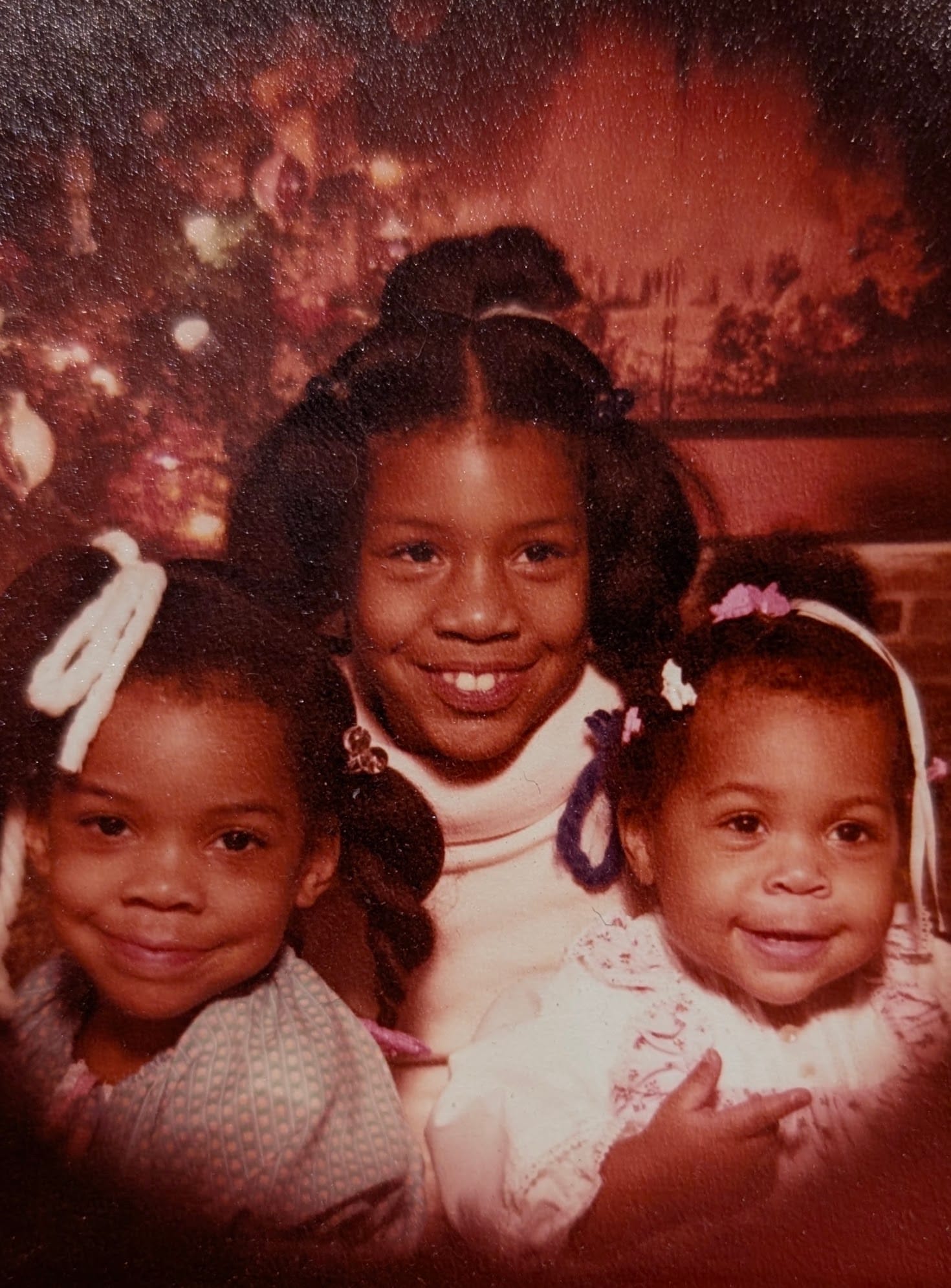
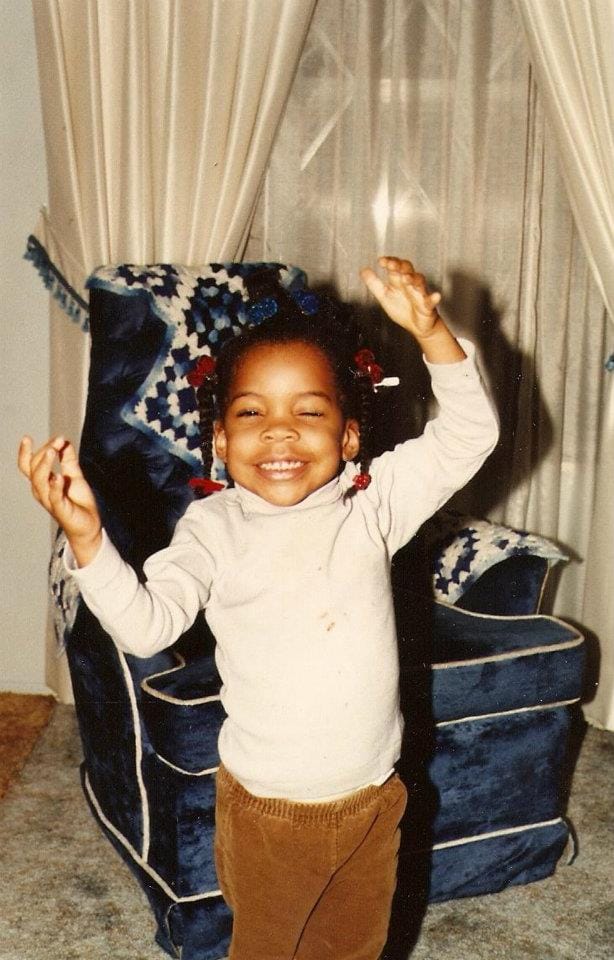
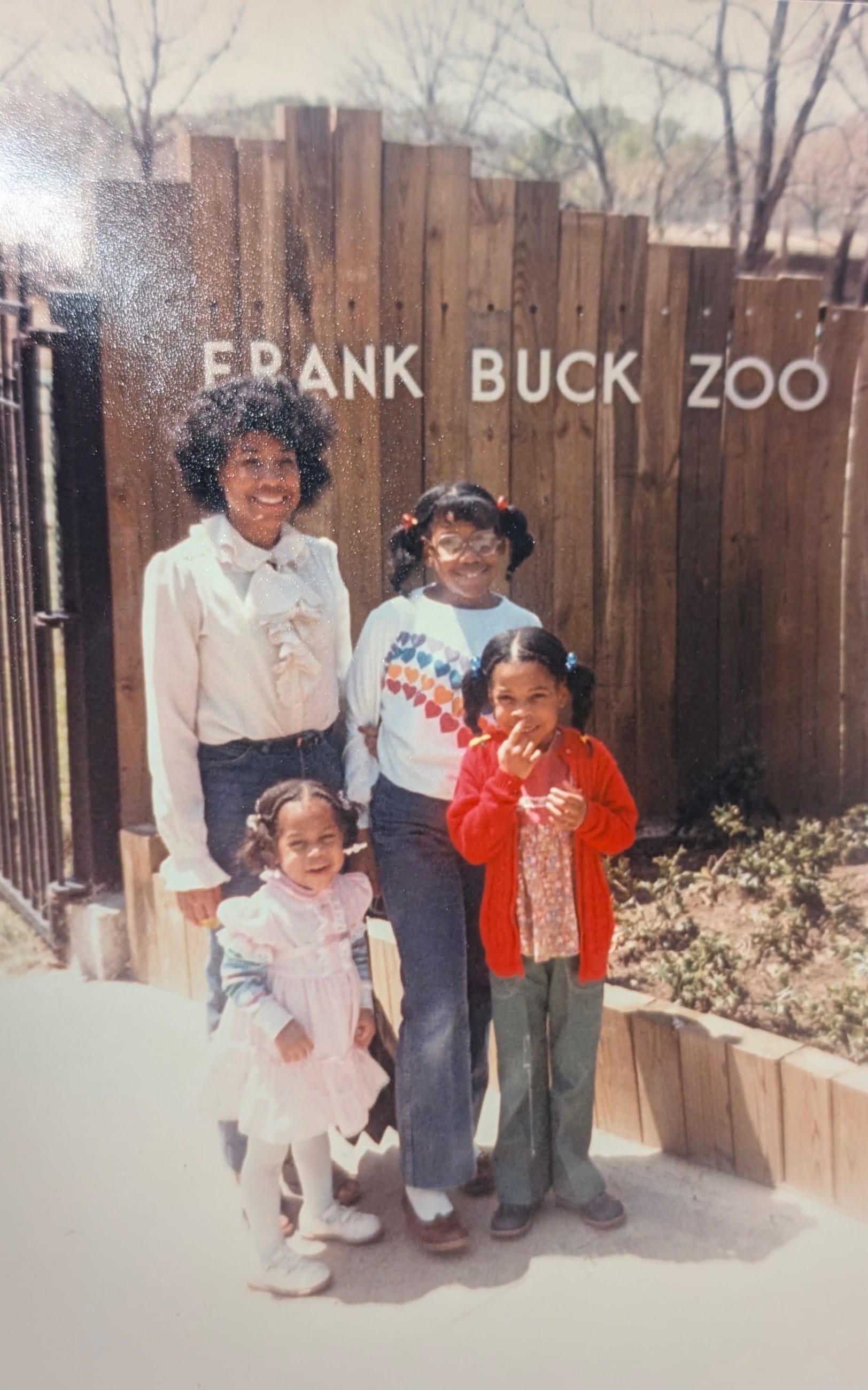
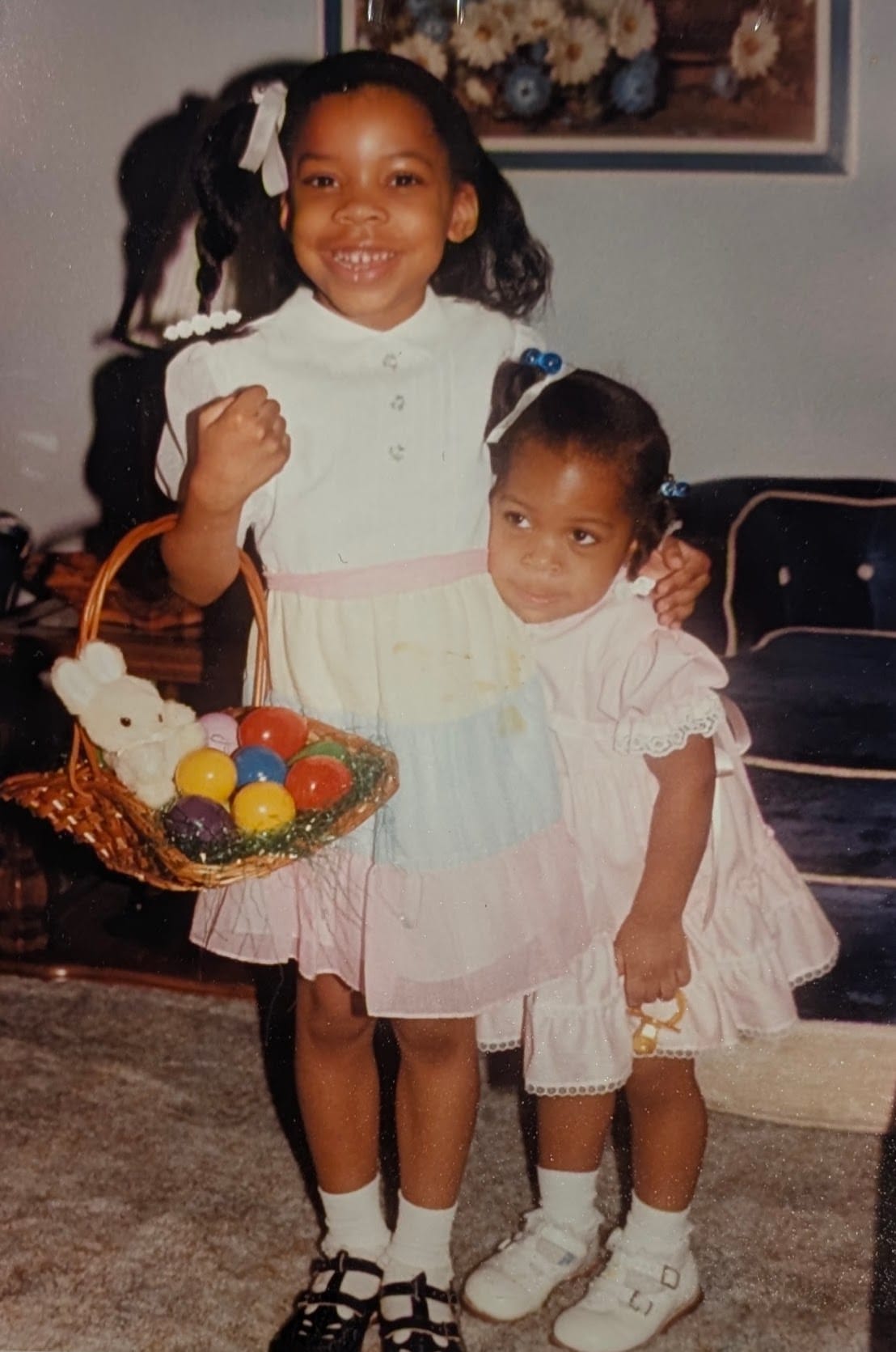
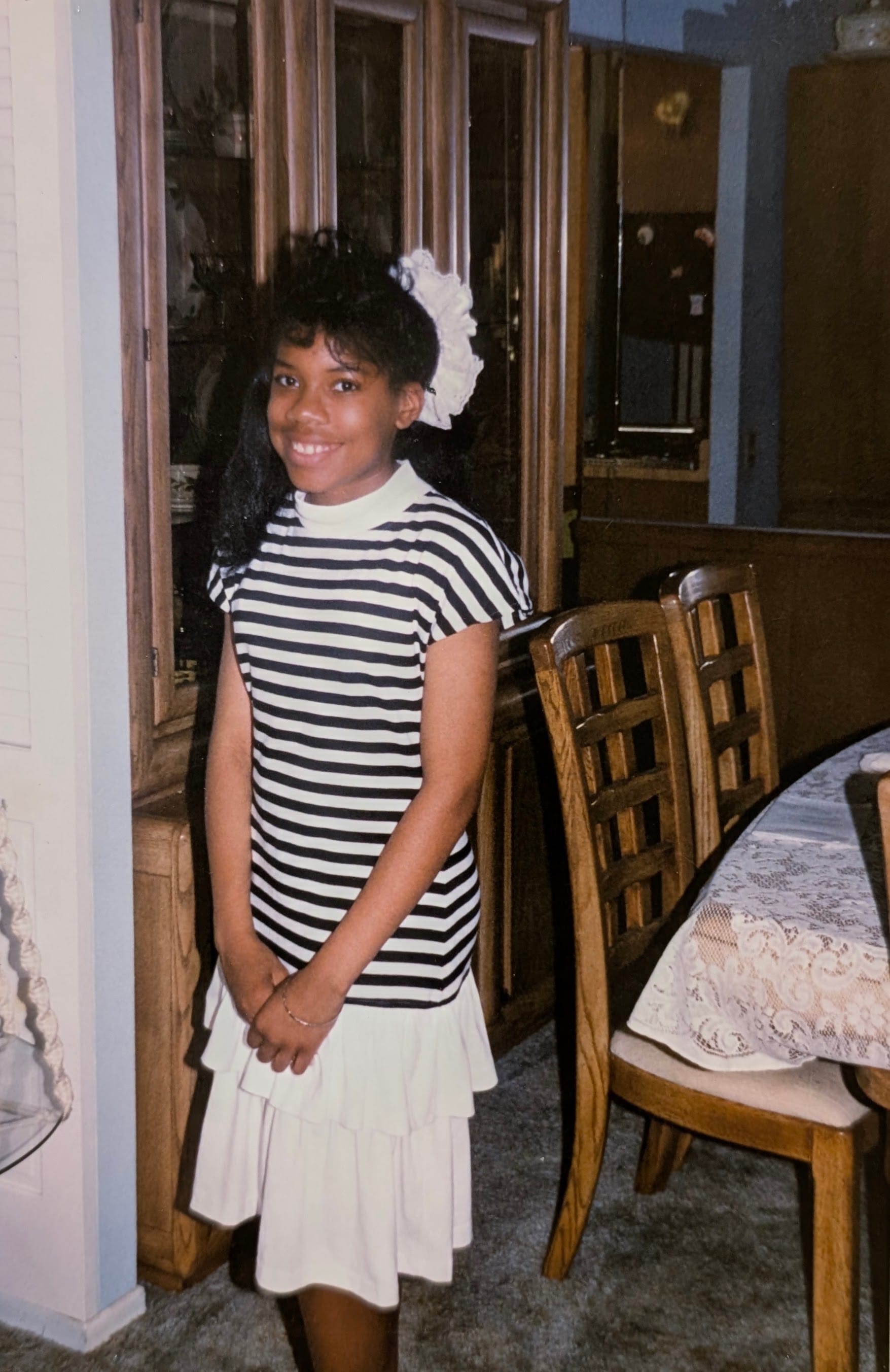
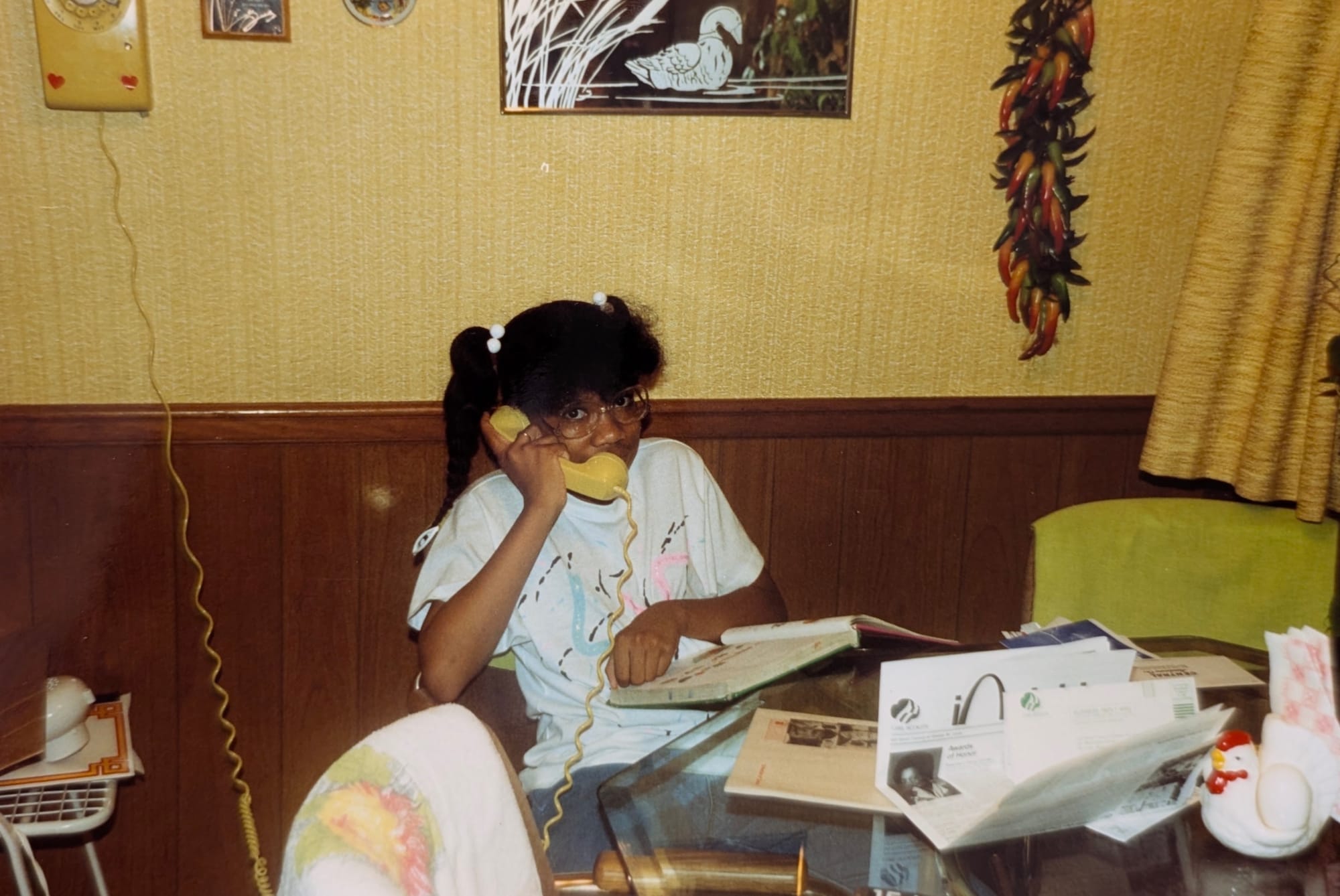
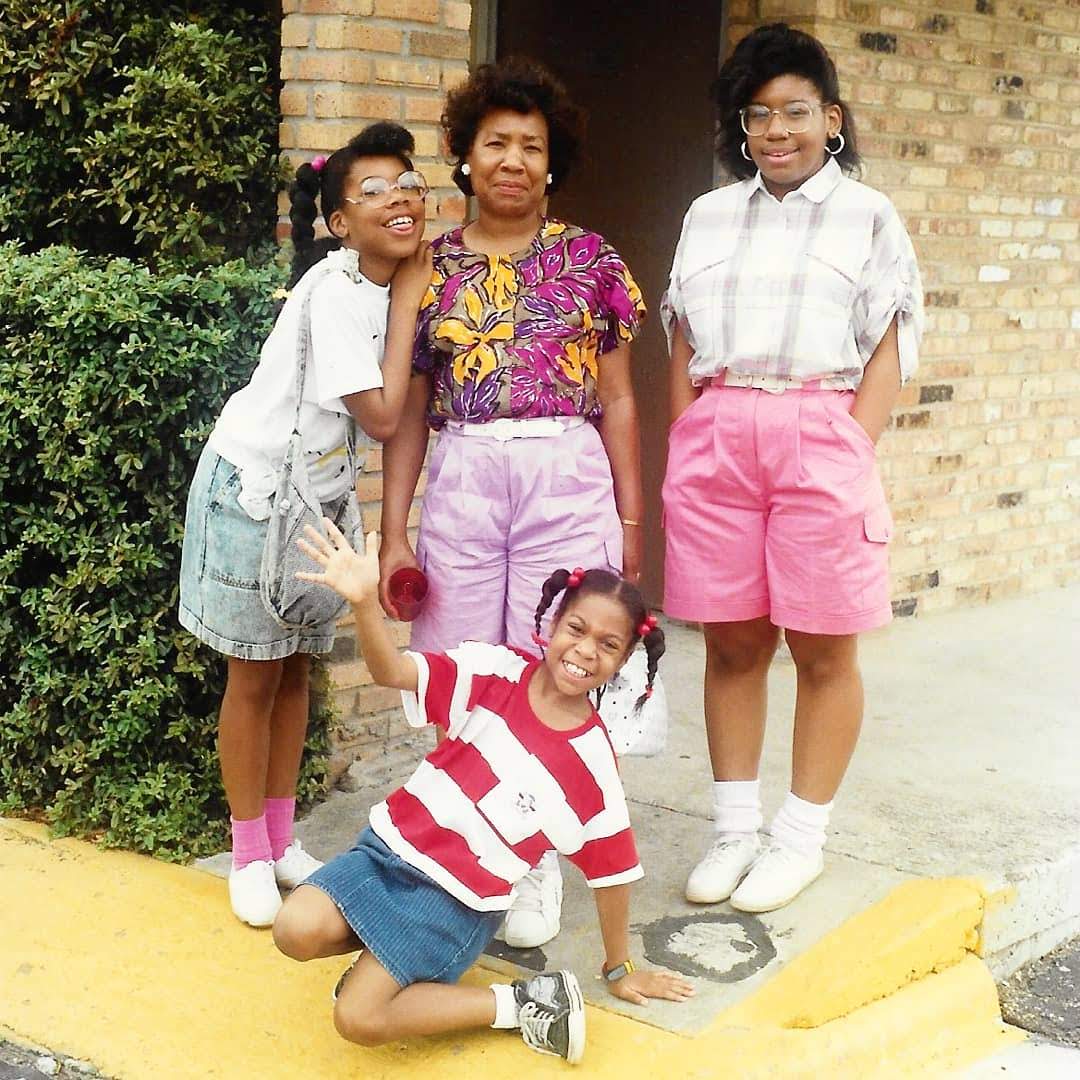
Photos of me, my sisters, and our mother, from our childhood. (BELTON FAMILY ARCHIVES)
We were also considered light-skinned, and I had long hair that my mom styled in twists with barrettes on the ends. While I was supposedly the smartest of the three of us, I was also the oddest. I had a lot of quirks that annoyed the other kids, and because of this, I was just as much of an outcast as Nellie.
Nellie wanted, quite desperately, to be my friend, I think.
I remember her smiling at me a lot, but never saying much. And I was so friendless as a child, I probably would have considered her companionship if it weren't for the fact that I represented a life she was told she couldn't have, and she didn't know how to process that.
So, to my surprise, after smiling at me all morning in class, instead of asking me to play with her, she punched me in the face after we lined up for lunch.
We were in the first grade, and it was all downhill from there.
Colorism: Racism's Ignorant, Uppity Cousin
Nellie wasn't the only Pecola I went to school with. In fact, I ran into different versions of this girl throughout my childhood and well into my teen years. Teachers and other students often pitted us against each other, and even when we were friendly, the friendship always ended with me in tears or being shunned.
I supposed I could have befriended the other light-skinned girls I went to school with, but we often didn't vibe, and I didn't see myself in them. I didn't even see myself as "light-skinned," because I didn't feel like I was treated like the other high-yellow, "Perfect Patties" at my school, who were more effortlessly cool and nowhere near as awkward as I was.
Plus, they treated me just as poorly as Nellie and the other darker-skinned girls, so I concluded I couldn't be light-skinned.
Growing up, my mother preached the ills of colorism and how being lighter didn't make anyone "better" than anyone else. That colorism was racism's confused, uppity cousin, or white supremacy with a paper bag test.
To her, our light skin was evidence of a crime. And, honestly, it was.
Rape by white men was an issue on both sides of my family tree. To my mom, it was weird to be proud of something that was created by an act so violent and foul, so she largely rejected it and expressed bemusement or confusion when people would assume she was a light-brown Filipina or biracial instead of a Black woman from Arkansas with four Black grandparents.
She didn't see what they saw, and never would.
'Drinking From the Trough of Ignorance'
The Bluest Eye was the first book I read as a youth that was so real to me, so vivid and heart-breaking, that I knew I would never pick it up again.
It wasn't that it wasn't good—it was brilliant. And it wasn't even Morrison's best work, which was still to come in her 1987 novel Beloved. But sometimes the best reads are the hardest. Sometimes the most impactful books are the ones that make you uncomfortable and turn inward.
Children are watchers and sponges. They see and soak up everything as they try to understand the world they are inheriting. If a child were to soak up Morrison's words, it's unlikely they would harm them, but rather enlighten them to the plight of girls like Pecola, my classmate Nellie, and the countless other girls I went to school with who were mistreated for being dark-skinned and female in a world where the so-called beauty standard was forever unobtainable to them.
These schools aren't simply banning themes of rape or incest—they're banning empathy. They're banning the understanding of painful truths so many children already have to live with.
Banning The Bluest Eye isn't protecting anyone.
In fact, it enacts a type of harm through omission that ensures children will continue drinking from the trough of ignorance. It's a kind of harm that encourages us to remain blind to the pain of others and allows adults to play pretend that children are too fragile for the very lives many are already living.
Years later, I ran into Nellie at a store with my mom when we were both in high school. By then, she was a teen mother. She was so happy to see my mom and me. As she smiled and chatted with Mama, I was simply sad. Even then, it felt like we should have been friends, but could never be because our lives had diverged so much. I didn't hate her. I wasn't even afraid of her anymore. But I was 16 and dreaming of college; she was 16 and changing diapers.
We never saw each other again, but her story has stayed with me, just like Pecola's, and I believe I am a better person for knowing both.